The Debate: Taylor Swift and the “Showgirl” Backlash
Taylor Swift’s new album The Life of a Showgirl has barely been out and already the burlesque world is sharpening its stilettos. Across social media, performers are split: some furious that she’s using a title steeped in stage history, others praising her for celebrating showmanship and spectacle.
And me? I’m somewhere in the middle.
Because while I understand the frustration “showgirl” isn’t a word to be thrown around lightly. I also think we’ve been watering down its meaning ourselves for years. If we’re going to get precious about the title, we’d better start with some self-awareness.
What “Showgirl” Really Meant and How We Lost the Thread
Traditionally, a showgirl wasn’t just anyone in sequins. She was a trained, disciplined stage performer. Think Folies Bergère, Ziegfeld Follies, the grand revue houses of old. These women rehearsed endlessly, danced precisely, and projected grace, strength, and stamina.
But let’s be honest, our own industry blurred that meaning long before Ms Swift ever touched it.
We’ve all seen it: someone thrown into a £12 eBay headdress and white lingerie, handed a pair of chicken feathers, and billed as a “showgirl.” We’ve built entire event posters on aesthetics rather than artistry. So when we clutch our pearls about Taylor “appropriating” the term, we might want to admit we diluted it first.
Taylor’s Version: The Modern Showgirl Spectacle
Let’s get one thing straight: Taylor Swift is not a Folies Bergère dancer. She’s a pop showgirl.
She embodies the modern version:
- Massive stage productions
- Elaborate costume changes
- Tight choreography
- Performance stamina that few could match
Her take is the stereotypical image: sequins, high heels, and lights. But that’s also the entry point for millions of people who’ve never seen a real cabaret or burlesque show.
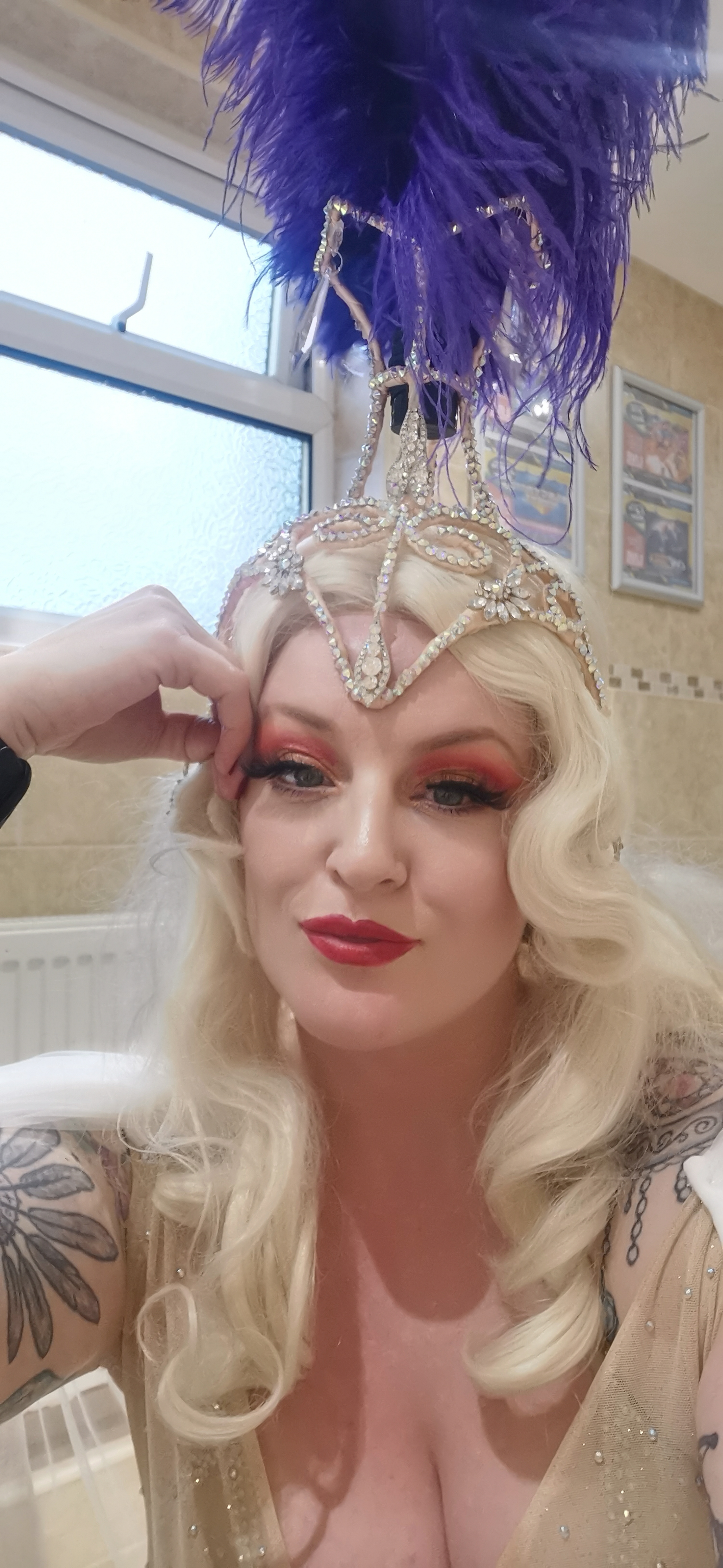
And yes, that image has limits. The “classic” showgirl stereotype implies one body type, one costume shape, one face of glamour. But that’s not the truth of our world. Many bodies are showgirl bodies. We have the tall, short, curvy, lean, tattooed, scarred, cis, trans, everything in between.
I’m a showgirl. Khandie Khisses – full-bodied, powerful, trained, lived, and very much in command of the stage.
If Taylor’s album sparks curiosity about what a showgirl can really look like, I’m all for it.
Why “The Life of a Showgirl” Could Actually Help Our Industry
Let’s stop seeing this as a takeover and start seeing it as a doorway. Taylor Swift’s album is going to put “showgirl” into Google searches, headlines, playlists, and fan merch for months.
That means:
- More visibility – Millions of fans discovering the term “showgirl” for the first time. Some will fall down the rabbit hole and discover us.
- More demand for glamour – Designers, milliners, and costumiers may see renewed interest in handcrafted stage pieces.
- More ticket sales – Audiences hungry for real, intimate performance might finally turn up at local burlesque and cabaret shows.
If we’re clever, this is a marketing gift. Use the buzz. Educate new audiences. Reclaim the title with integrity and artistry.
The Blunt Bit: My Khandie Khisses Take
- Taylor doesn’t own “showgirl” — but she’s not desecrating it either.
- We watered the meaning down ourselves — let’s rebuild it properly.
- All bodies are showgirl bodies. The stereotype is tired; it’s time to show what real diversity looks like on stage.
- Leverage the moment. Don’t sneer at the spotlight — step into it.
So yes, I’m on the fence. But it’s a damn fine view from up here. I am watching a word we love step back into the global conversation. Let’s use that light to our advantage and remind the world what a real showgirl looks like.


