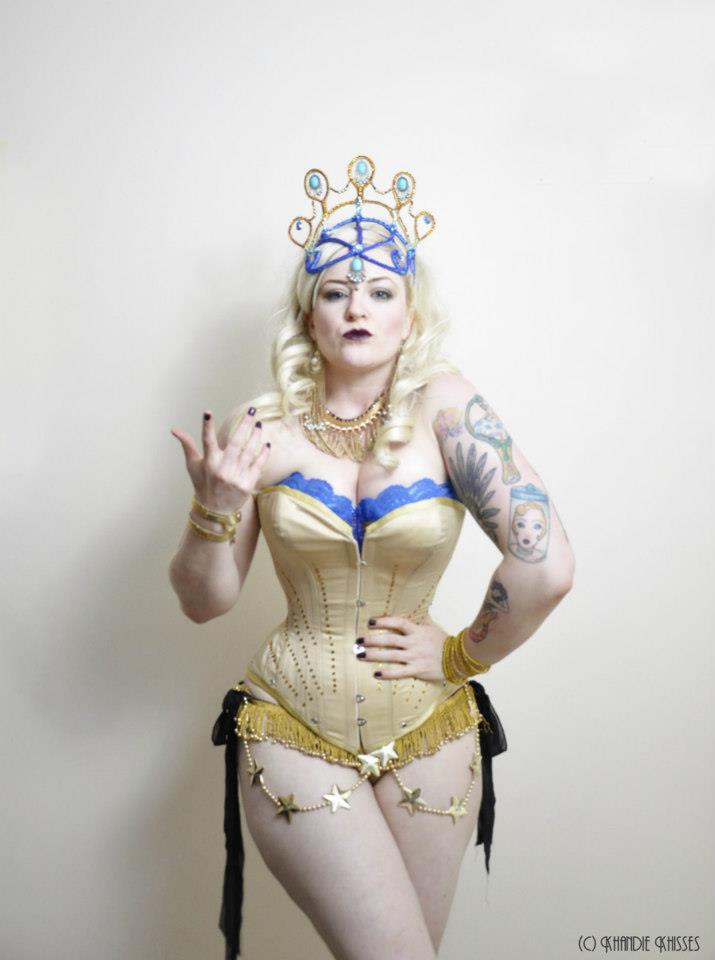
So the BBC decided to dip its toe into the world of burlesque again (collective yawn), asking the age-old question: Is burlesque empowering or degrading to women?
Spoiler alert: the article doesn’t break any new ground. It leans hard on the glitz, the Vegas dazzle, and a few cherry-picked academic takes, then slaps on a veneer of “balanced” reporting. But let me be crystal clear: burlesque is not just some sparkly side hustle for showgirls playing dress-up for male validation. It’s art. It’s rebellion. It’s community. And it’s bloody personal.
As someone who’s been on stages across the UK (and beyond), rhinestoned knickers and all, let me set the record straight: burlesque is not just about being seen: it’s about being heard without even speaking.
Burlesque Is a Mirror, Not a Mascot
One of the BBC article’s biggest sins? It reduces burlesque to its most surface level: “shiny, sexy cabaret with a wink.” That’s a lazy take. It treats burlesque like a monolith, as though every performer is grinding out the same feather fan routine for the same tired audience. Spoiler: we’re not.
Burlesque in the UK has been a home for the weirdos, the outcasts, the political agitators, the body-positive pioneers, and the artists who don’t give a damn about fitting a commercial mould. Yes, some of us use rhinestones, but the work? It’s gritty, layered, and often deeply personal.
Empowerment? Degradation? Stop Making It Binary.
I’m exhausted by this binary debate. “Is burlesque empowering or degrading?” It’s 2025 can we stop pretending women’s choices only fall into two neat categories based on whether they make someone else uncomfortable? Its just old hat isnt it!?
Here’s the truth they never say out loud: when a woman controls how she’s seen, some people will always call it degrading. That says more about them than it does about us.
Burlesque doesn’t empower because it’s sexy. It empowers because we decide what sexy means, what we reveal, what we don’t, and why the hell we’re even on the stage to begin with. Also burlesque isnt just ‘sexy’, its political, provocking and boundary pushing.
The Class Divide in Burlesque
Let’s talk about what the BBC really missed: class and accessibility.
Burlesque didn’t start in some posh West End theatre with a budget big enough to feed a whole community for a month. It started in working-class music halls. In backroom pubs. In underground spaces run on grit and gaffer tape. And that burlesque still thrives: quietly, fiercely, and often invisibly to the mainstream. A niche entertainment for those who know or not know yet.
The BBC’s obsession with high-end “burlesque productions” ignores the grassroots. The regional shows. The pub stages. The performers who sew their own costumes and eat noodles for a week just to pay for travel to a gig.
Not everyone wants to be in a glitzy production line wearing couture pasties. Some of us are telling stories. Making statements. Laughing in the face of expectations. That’s just as valid and dare I say arguably more so.
Burlesque Is (Still) a Fuck-You to the Patriarchy
You want real burlesque? Go to a fringe show where the performers range in age, size, ability, gender identity, and race. Watch a performer mock the male gaze, spit out a punchline wrapped in a glove peel, or rip down the idea that only certain bodies deserve applause. That’s the burlesque I know. And no, it doesn’t always come with a standing ovation or a headline review, but it damn well should.
We are not here to make you comfortable. We’re here to challenge, to celebrate, to survive.
And if someone finds that degrading, maybe they need to ask why agency makes them so uneasy.
My Burlesque Isn’t Your Headline Fodder
I’ve been performing for over a decade (nearly 2 now). I’ve taught, toured, judged, and mentored. I’ve met some of the most brilliant, raw, funny, damaged, healing, empowered people on the burlesque scene.
They don’t fit your neat BBC narrative. They’re not all shiny. Some are messy. Some are angry. Some are hilarious. Some cry after their sets. But every single one of them is there by choice, on their terms.
So to the BBC and anyone else clutching their pearls at the idea of women removing clothing on stage and calling it art:
We’ve been doing this longer than you’ve been pretending to understand it. And we’ll still be here long after your headlines fade.
Burlesque isn’t dying. It’s evolving. It’s not rhinestones or ruffles. It’s resistance.
And it’s glorious.


